
Customer operations · September 25, 2026
How to build a Telegram customer support escalation workflow
An escalation should move a customer issue to the right teammate without losing the original owner, context, or next action.
Why escalations become service gaps
Teams often escalate by forwarding a message or mentioning a manager in a chat. That can create a second conversation while the original customer thread remains unowned. The customer sees delay, while the team loses the decision history and the next action.
A four-step escalation workflow
1. Define what needs escalation
Use clear triggers such as a policy exception, unresolved technical issue, sensitive customer request, or a case that needs a different role. Avoid escalating simply because a teammate is busy.
2. Preserve the customer context
Pass the latest messages, customer details, tags, relevant notes, and the reason for escalation. Do not copy passwords, verification codes, or payment credentials into the handoff.
3. Keep one accountable owner
Record who owns the next customer-facing action. A specialist or manager can advise without creating two competing owners. If responsibility changes, make the transfer explicit.
4. Turn the next step into follow-up
Create a task when the issue needs research, approval, or a later reply. Include a due time and enough context for the assignee to act without searching through private inboxes.
The customer should have one visible path to the next action, even when several teammates contribute behind the scenes.
What managers should review
- Which escalated conversations are waiting for an owner?
- Can the current owner explain why the issue was escalated?
- Is the next customer-facing action visible as a reply, task, or handoff?
- Does the receiving teammate have only the access and data scope needed?
How COnnect supports the workflow
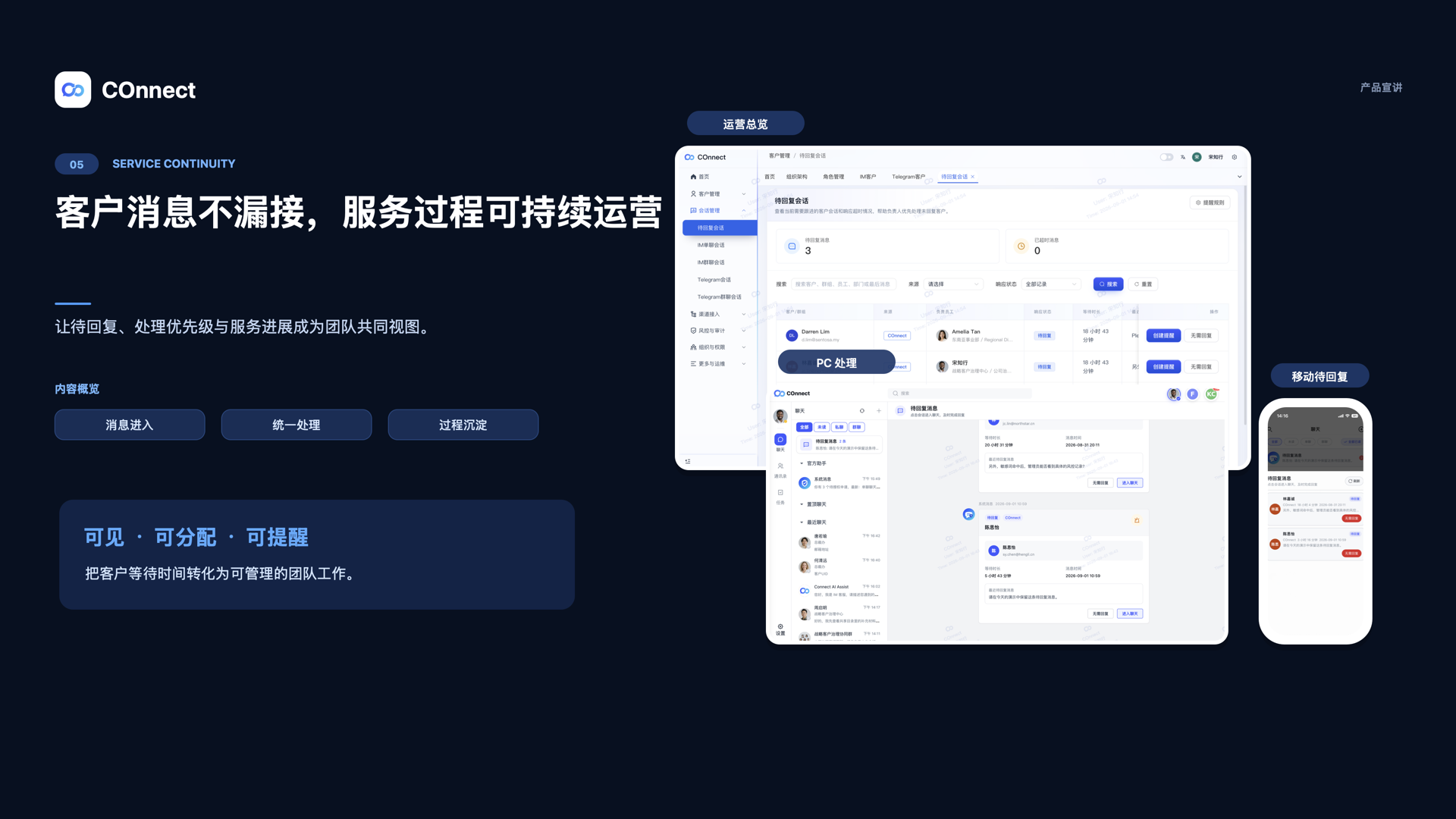
COnnect connects customer ownership, conversation context, pending-reply visibility, task follow-up, organization roles, data-scope controls, and approval or risk-review records for supported workflows. It does not replace a company's escalation policy, guarantee resolution times, or make every Telegram action an auditable approval.
For pending work, see the pending-reply guide and the team operating model.
FAQ
Should escalation create a new customer conversation?
Usually no. Keep the customer context together and make the internal handoff or task visible to the receiving teammate.
Who owns the customer after escalation?
The organization should name one current owner for the next customer-facing action. Advisers can contribute without creating competing ownership.
Does COnnect automatically approve every escalation?
No. COnnect supports approval or risk-review records for supported workflows; the organization still defines which cases require approval.
Make escalations accountable from first handoff to final reply.
See how COnnect connects customer context, ownership, permissions, and follow-up.
Talk to the enterprise team