
Customer operations · September 11, 2026
How to protect customer relationships when an employee leaves
An employee exit should trigger a controlled customer handoff, not a scramble through private inboxes. The goal is to preserve the relationship while removing access that is no longer needed.
Why employee exits create customer risk
Customer context often sits across conversations, notes, labels, tasks, and personal account access. Without a repeatable process, teams can miss a waiting customer, lose the reason for a previous decision, or leave an old account connected longer than necessary.
A four-step handoff checklist
1. Build the active customer list
Start with the conversations and customers currently assigned to the departing employee. Include pending replies, open tasks, recent escalations, and customers who have contacted the employee recently.
2. Review context before reassignment
Read the latest messages and notes, confirm the customer identity and source channel, and record the next business action. Avoid copying passwords, verification codes, or unrelated private information into handoff notes.
3. Assign a new owner and narrow access
Choose an active teammate who is allowed to handle the customer within the organization scope. Then remove or revoke access that the departing employee no longer needs. Responsibility should move explicitly; it should not remain attached to an inactive account by accident.
4. Close the follow-up loop
After the handoff, check that pending-reply work and open tasks point to the new owner. The receiving teammate should send the next response or record why the conversation is waiting.
A clear owner, reason, and next action help the team recover service even when the original employee is no longer available.
Questions managers should be able to answer
- Which customers were assigned to the departing employee?
- Which conversations are waiting for a reply?
- Who owns each relationship after the handoff?
- Which account, role, or device access must be removed?
- Can the next teammate see enough context to continue safely?
How COnnect supports the process
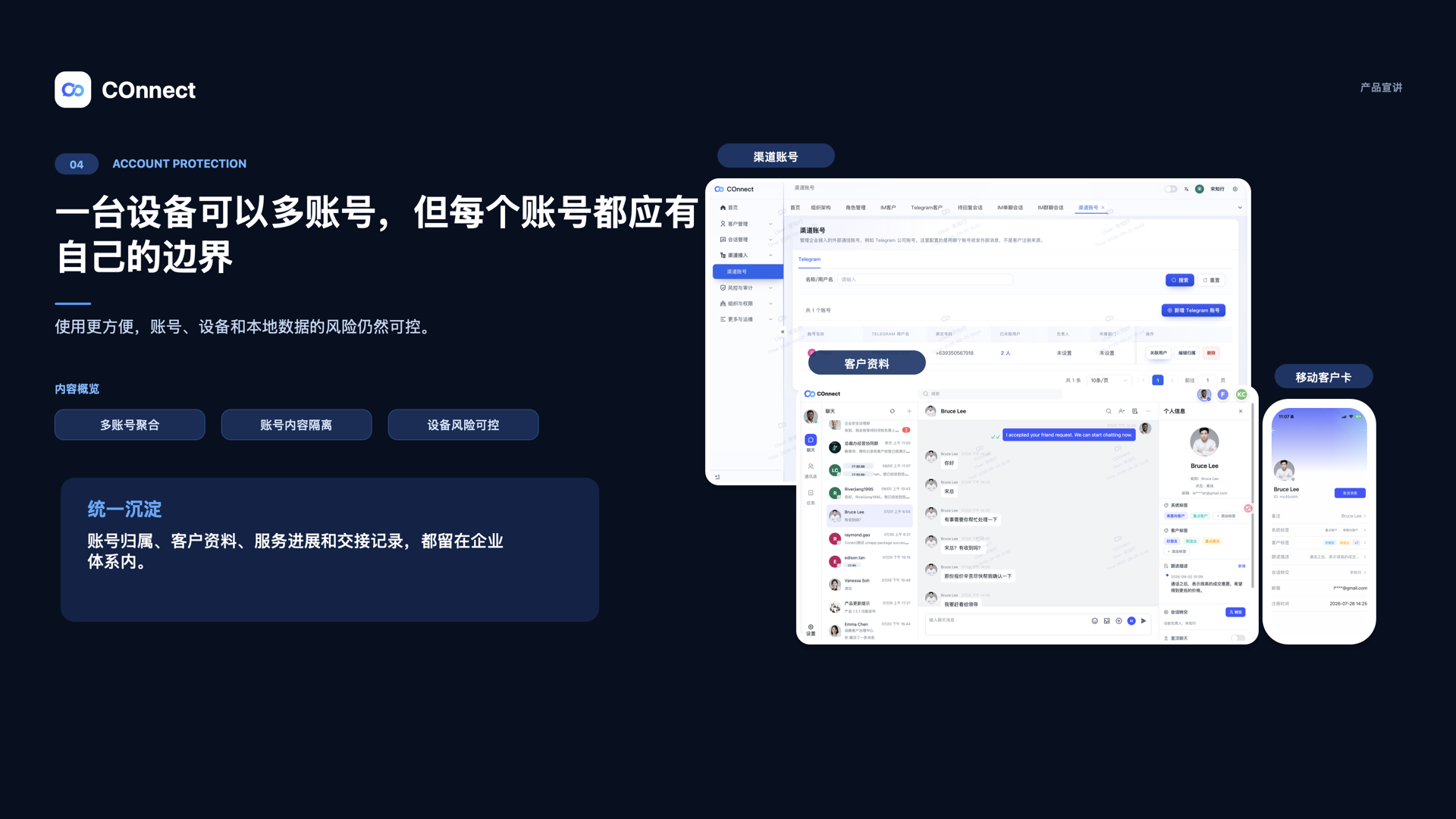
COnnect brings customer ownership, conversation context, pending-reply visibility, task follow-up, organization roles, and data-scope controls into one governed workspace. This gives managers a repeatable way to transfer customer responsibility without granting every teammate unrestricted access.
FAQ
Should the departing employee export customer chats?
Use the organization's approved handoff process instead. Do not move customer data into personal storage or unapproved accounts.
What if a customer is waiting during the handoff?
Assign an active owner, review the latest context, and make the next action visible before closing the handoff.
Make customer handoffs a managed business process.
See how COnnect connects ownership, permissions, customer context, and follow-up.
Talk to the enterprise team